

Rosh Hashanah
A national holiday.
The first day of the year according to the Hebrew calendar.
It's the opening chapter of the Israeli great "Holiday Season," which stretches across one long month in the transitional season between summer and winter.
Rosh Hashanah, or as it's called in spoken Hebrew: Roshashanah – includes two days of celebration, but it's preceded by three weeks of planning, cooking, shopping, invitations for hosting, and common dilemmas about where to be for the holiday to feel part of the collective.
Roshashana is a religious holiday with thousands of years of Jewish roots. It has a multitude of faces and forms: religious, traditional, national – and every citizen of Israel celebrates the holiday in their own way.
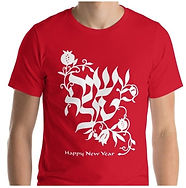

Over the years, the holiday has taken on a national character with a lot of tradition and fewer religious hallmarks:
Tradition seats extended families around a table laden with the most traditional foods, interspersed with: apple, honey, and pomegranates.
Tradition fills synagogues with religious and traditional Jews. They arrive in droves in the morning and stay there until noon – to recite especially long prayers and listen to the sounds of the Shofar.
Tradition leads all other citizens to picnics in nature and overnight stays in a B&B or hotel, and for a family tour to visit parents, aunts and uncles, grandparents. Those who don't find their place in all these options traditionally escape abroad.
Tradition obligates employers to present a "Holiday gift" to every employee, and spurs suppliers to give clients promotional gifts – a calendar, an office diary, a fancy pen, or an ornate ashtray.
In the days leading up to the holiday, tradition fills stores and markets with masses of Israelis who are turning a new page, which includes new cooking pots, a new television, a new living room set, clothes and shoes, a computer and a refrigerator – everything new in honor of the New Year.
In the 21st century, one more phenomenon is gaining momentum: Heavy congestion of travelers at Ben Gurion Airport.
Thousands of Jews from Jewish communities around the world step in, feeling a religious or familial need to celebrate the holiday in the sole Jewish homeland.
On the other side: in the departures hall, hundreds of thousands of Israelis queue up, preferring to observe the holiday traditions outside the country's borders – in the Greek Isles, Thailand, Africa, and anywhere else in the world where they can momentarily escape the crowdedness of their small country. And it's a good opportunity for a few days of vacation.

Roshashana.
Tradition begins here.
With the Hebrew calendar, which is only in Israel. With the Shofar, which is only in the synagogue, with the annual summaries in the media, with the annual song parade on radio channels, with hopes and forecasts for the New Year, with greetings and good wishes (Shana Tova - Happy New Year) on the phone, via SMS, WhatsApp, and email.
Rosh Hashanah.
With the joy of the holiday for those who belong.
With the holiday's melancholy for the lonely and for all who haven't found belonging.
With a non-festive indifference for the Arab minority and for all non-Jews residing in Israel.


Israeli Knowledge Bites on Rosh Hashanah:
-
Traditional Blessing: "Shana Tova" (Good Year). Via WhatsApp or email.
-
For Adults and Nostalgia Enthusiasts: A traditional, printed, and ornate greeting card in the 20th-century style.
-
Traditional Question: "Eifo Atem BeRoshashana?" (Where will you be for the holiday?).
-
Traditional Custom (for the religious only): "Tashlich" – symbolically 'casting away' sins into a body of water (like the sea).
-
Traditional Sound: Shofar tooooooooooooo...too too too too. (Click to listen).
-
Holiday Eve Updates: Traffic conditions on crowded roads.
-
Family Problem: Who will bring Grandpa and Grandma to the festive family meal?
-
Israeli Insight: After every Rosh Hashanah – Yom Kippur follows. (After a day of celebration, a day of fasting and sadness often follows.)
Historical Bits:
Rosh Hashanah is one of the holidays that has accompanied the Jewish people through thousands of years of exile, like Passover, Shavuot, and other unique holidays that span the pages of the Hebrew calendar.
Its position as the first on the calendar gave it a head start over others as a landmark – two days of transition from one year to another. The holiday brings with it an atmosphere of renewal and anticipation, and on the flip side, it allows for a summary of the past year. This is especially good for the media outlets that prepare their summaries for several weeks and wait for the holiday eve to fill their channel with the most fascinating summary.
The religious hallmarks of Roshashana, like the sounding of the Shofar and special prayers, have been passed down from generation to generation, But even more than these, the tradition of a special meal and family gathering around tables set with special items: pomegranate, honey, and apple, has become deeply ingrained in people's hearts.
As the senior holiday among the festivals, its two days have always been days of rest from work, days dedicated to various activities depending on the individual's or family's level of religiosity.
In the 1930s, the years of the consolidation of Socialist-Secular Zionism in the Jewish Yishuv in the Land of Israel, efforts were made to imbue the holiday, as with all other holidays, with more Hebrew and fewer religious hallmarks. In those years, nature and home leisure prevailed over prolonged stays in synagogues. The pomegranate and honey stood out more.


Shanah Tovah greetings printed in the 1930s
The trend reversed in the 1940s, the years of the World War and the Holocaust that wounded the Jewish people.
Many in the Jewish Yishuv (pre-state community) returned to the synagogue, even completely secular individuals. To reclaim their Jewish identity, which seemed to be disappearing, to hear the sound of the Shofar and recite Kaddish and Yizkor prayers in memory of the victims. The demand for prayers was so great that in large cities like Haifa and Tel Aviv, they were forced to hold them in movie theaters, which also filled to capacity. In Jerusalem, tens of thousands still managed to say prayers at the Western Wall each year, before it was conquered by the Jordanians.
In the 1950s, the trend continued and even intensified with the arrival of new immigrants from all over the Diaspora.
For them, the establishment of the state was a kind of miracle, and the fulfillment of the vision of the people's return to their land. They were sure that here, religion and tradition were strictly observed, they went to synagogue and adhered to the sanctity of the holiday even more than they had in their countries of origin.
An increased influx of worshippers changed the "synagogue industry."
More synagogues were built, with generous assistance from the religious establishment. In large and small cities, they competed for worshippers' "quality time" – comfortable seating, air conditioning fans, and a cantor whose voice was pleasant and knew how to give an excellent performance to the congregation. This upgrade cost money, which the Gabbaim (synagogue wardens) collected from worshippers who paid for a seat. Those who wanted to earn the honor of an "Aliyah LaTorah" (being called to the Torah) on Rosh Hashanah paid much more.
The commercialization of the day's sanctity contributed to the alienation of many worshippers who understood that in the Jewish state, even sanctity had a price tag. They looked around and saw masses of secular people preserving the holiday tradition in their own way, and joined the mainstream, preferring rest and symbols over religious elements.
In the 1960s and 70s, more and more cars were seen on the way to vacations in hotels or natural sites. Synagogues remained the stronghold of the more or less religious – these continued to be the guardians of the holiday's religious flame.
The trend continued in subsequent decades, leading Rosh Hashanah to be what it is today, in 2023, as the state marks 75 years.


This is part of "The Israeli Story 1948-2025" project.
What is "The Israeli Story"?
A curated selection of Israeli snapshots, those that were and still are with us. Each one deserves an updated definition with a few words of explanation along with a tiny bit of history. Just a little – and all of them together go into the virtual Israeli Story that will remain online for future generations. You can see what's included in it by clicking on the icon below.
