

Tzav Shmoneh
(Order Eight)
A Tzav Shmoneh (Order 8) is a personal call-up order for immediate mobilization for security service in a state of emergency.
It is unique to the State of Israel and has been part of its ethos since its establishment and for 75 years.
The call for immediate service is common when a war breaks out or when an important military operation is underway.
This is a quiet, almost covert call. Without official publication. The call can be delivered at any time of day or night – by personal delivery of the order, by a phone call, by email, or by a WhatsApp message. In the state’s first decades, reserve units were also mobilized through a public call, such as: the broadcast of passwords or code words on radio channels and/or their publication in newspapers.
The Number 8 call-up order is intended for men and womenwho have already completed their regular military service, have been discharged, and belong to the IDF’s reserve forces or other security forces. This is not a regular, pre-scheduled reserve duty. It is an exceptional, unexpected Order 8, and anyone who receives it must report for duty immediately, by command. It doesn't matter where they are or what they are doing at that moment.
Most of those called for emergency mobilization are aged 20-40 – Israeli citizens from all walks of life, from all social classes and sectors. Experience and history prove that those who are called obey the command – they drop everything, grab a backpack or a side bag, say goodbye to their family, and report for duty to fulfill the mission they will be assigned.
Every person who has served in the IDF, whether they continue to serve in the reserve forces or not – knows deep down that the call could also come to them in any season of the year.
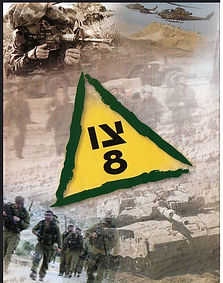
Tzav Shmoneh is unique to Israel and has no equivalent in any other country.
Obedience to it is a supreme value in Israeli society, like the army, the flag, and the anthem. The order 8 and the call are seared into the consciousness of Israelis who serve in the army as something that goes beyond a legal command – it is an order of the heart and mind, which motivates the immediate willingness to report for duty to defend the state.
This has a direct connection to its history and the circumstances of its establishment.
In its Declaration of Independence, Israel proclaimed itself a national home and a refuge for every Jew, wherever they may be. This was a necessary declaration written a few years after the Holocaust, which annihilated six million Jews. Since then, and throughout its existence, Israel has faced threats to its very existence from enemies who wish to destroy it – those within its borders and those who threaten it from afar.
Immediately after the establishment of the state, the Israel Defense Forces (IDF) was formed, and the Knesset enacted the Security Service Law, which regulates its activity and organization. The law places service in the IDF at the center of the lives of Israeli citizens and gives validity to the fact that the state's very existence depends on the strength and power of the IDF and other security forces, such as the Mossad and the Shin Bet.
Section 8 of the law authorizes the Minister of Defense to mobilize, in a state of emergency, citizens who are necessary for immediate service.
Since then and for 75 years, Section 8 has been used a large number of times. Especially in the major wars and military operations that took place here between the wars, and during periods of heightened security tension when the army was required to go on high alert – and there have been dozens of such times in Israel's history.
Millions of Israelis have received the Order Eight, at least once in their lives.
They generally obeyed, and the reporting for duty was full. In many cases, even above and beyond – those who reported for duty even though they were not called. Only a very few evaded it with various excuses. All the rest mobilized by command of the heart and the Israeli ethos. In the great and historic wars, like the Six-Day War and the Yom Kippur War – those reporting for duty even arrived on direct and quick flights from abroad.

October 1973, Ramat Gan, Yom Kippur War,
a soldier who was mobilized for the war says goodbye to his wife.
The term "Tzav Shmoneh" is familiar to most Israelis, those who serve in the army and/or the reserves. Most of them are Jews, Druze, Bedouin, and Christian Arabs. The term is not common in the discourse of the Muslim Arab minority, nor among the ultra-Orthodox minority, most of whose sons and daughters do not serve in the army at all.
Over the years, the expression also spilled over into Israeli discourse and is used to describe any mobilization of people or companies in civilian society for some goal – from a company CEO who retired and is called in a metaphorical "Tzav 8" to save the company before its collapse, to children who were called to report to the bedside of their sick parents, and came.
Historical Bits
A Tzav Shmoneh has existed in Israel almost since its establishment.
Its first widespread use was in the Sinai Campaign, in 1956, the first time that reserve soldiers were called up for a war. About a decade later, in 1967, before the outbreak of the Six-Day War, an existential threat faced the State of Israel, after a declaration of war from three armies of the countries surrounding it. The memory of the Holocaust was still fresh, as was the memory of the pogroms that Jews had suffered in Arab countries. For four weeks, all reserve units were mobilized into the IDF through a Tzav 8. Israeli citizens felt threatened, and the call to report for duty was fully answered by everyone who received it. The flocking to the improvised mobilization points was massive, over 100%. Among those who reported for duty were many who were abroad.
Six years later, in 1973, the Yom Kippur War broke out, which surprised the State of Israel.
Again, an existential threat faced the state, and again Tzav 8 orders were distributed, and again there was a full report for duty, and again airplanes were seen taking off from various countries around the world, carrying Israelis who were abroad and came to fulfill their patriotic duty.
Afterward, there was the First Lebanon War (1982), the Gulf War (1991), the Second Lebanon War (2006), and Operation Protective Edge in the Gaza Strip (2014). In all of these, the call-up order with the number 8 was used. The orders were distributed in more limited scopes, like the scope of the use of army forces – in a specific and limited way.
Between all the wars and operations, there were also days of security tension in which the call-up order was used for reserve soldiers in special and designated roles.
After Israel completed 75 years of existence, it seemed that the Tzav 8 would remain as a symbol on the shelves of history.
But...
Five months later, in October 2023, war broke out again, in the Gaza Strip, (The "Gaza war"), and again an existential threat faced Israel.
And again, just as in the great and historic wars of the state, the reserve soldiers were called to the Israeli flag, and the call-up order No. 8 proved that it is alive and breathing and gives life to Israeli patriotism – from the moment the outbreak of the battles in Gaza became known, masses flocked to the assembly points. They dropped everything and came from all over the country.
Israelis who were abroad stopped their vacations or studies and flew on full planes on their way home. They put on uniforms and went out to defend their home, the State of Israel.

October 2023. Israeli men and women who received a Tzav 8
while abroad, on their way to Israel in a plane.
How the Call Works ?
The Tzav 8 call is carried out in non-public ways.
In the state’s first decades, the order was a paper form that bore the title "Emergency Call-up Order." In every IDF unit, the mobilization mission was eassigned to specialized teams who were trained for it. Some of them were in charge of issuing the order, while others traveled to every home, knocked on the door, and delivered the order to the person called to report.
Another way of mobilization was through unique passwords or code words that were broadcast on the radio or published in the written press. In those days, most released soldiers continued to be part of the IDF's reserve forces, and every discharged soldier received their code words along with their release form – a code they had to guard and remember, to be alert in their civilian life, and the moment they heard the code on the radio, they would put on their uniform and report for duty at the designated place they received along with the code.
Starting in the 1980s, the summons was also carried out through personal phone calls to the mobilized, and from the 2000s, messages were also included via email, text messages, and WhatsApp messages.
In the first decades, private vehicles and civilian engineering equipment were also mobilized for the army.
The mobilization was carried out through the expansion of special emergency orders. Their number was not 8, but their purpose was the same: the equipment was part of the security need and the overall system of mobilizing the State of Israel's resources, and part of the broader picture of the mass mobilization to preserve the state's existence.

Tzav 8 - an original form of the order that was delivered to a person reporting for duty in the state's first decades.
For a larger view - click on the image.
Tzav Shmoneh in Culture
Despite the widespread circulation of the order, it maintains a certain secrecy.
It is an open secret that is known only to us, the Israelis – we, who know we have no other country and no other home, we who accept its existence as an inseparable part of our identity and the heritage we pass from generation to generation. We guard it like a family secret and know there are things you don't talk about. It’s something better kept within the family or among the "Hevreh". This is also the reason for its absence from public discussions.
The unique character of Tzav Shmoneh is minimally expressed in literature, cinema, and song.
It is accompanied by descriptions of the sudden call that catches a citizen wherever they are – in the middle of a vacation, at the start of a business, in the last month of his wife's pregnancy, in the middle of a vacation abroad. And immediately after that, the obvious follows: the man pulls out of the closet the uniform left for emergencies, says goodbye to his wife and children or girlfriend or parents, and leaves for a place from which he may not return.
In every place it is mentioned, it is done casually, while preserving its secrecy or its very existence, as an introduction to the event itself – the going out to battle to defend the homeland, which is the important part.
Tzav Shmoneh is the practical expression of the special Israeli spirit that no other nation in the world has, and it is expressed in the timeless song that has not aged and was, and still is, a part of the eternal soundtrack of Israel and of Israelis: "L'Chayey Ha'am Ha'zeh" (To the Life of This Nation).
The song "L'Chayey Ha'am Ha'zeh"
For listening on YouTube.
This is part of "The Israeli Story 1948-2025" project.
What is "The Israeli Story"?
A curated selection of Israeli snapshots, those that were and still are with us. Each one deserves an updated definition with a few words of explanation along with a tiny bit of history. Just a little – and all of them together go into the virtual Israeli Story that will remain online for future generations. You can see what's included in it by clicking on the icon below.


