

Hul
(abroad)
Hul (an acronym for the Hebrew words "Hutz La'Aretz," meaning "Outside the Land" or abroad) is one of the most frequently used words in Israeli discourse and an inseparable part of the daily routine. It is mentioned in the context of vacations and travel, work or studies, relocation, or emigration ("Yerida") – all common concepts in Israeli society.
The two words – Hutz La'Aretz – are pronounced in spoken Hebrew as one word: Hul. For Israelis, it is not just a geographical place but a deep cultural concept, a talked-about topic in the media, a thriving industry that is part of the economy, and an achievable goal.
Data from the Central Bureau of Statistics (CBS) proves it:
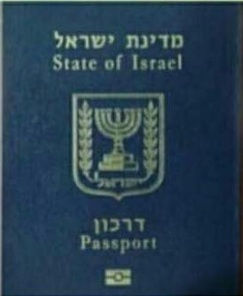
an absolute majority of Israeli citizens (about 90 percent) have left the country's borders and had their passport stamped at least once in their lives. Or, as they say in spoken Hebrew: yatze'u le'hul (went abroad).
This is no longer a phenomenon or a trend.
This has been a constant routine since the late 20th century and has greatly intensified since the beginning of the 21st century: Israelis feel the need to leave the country in which they live and spend some period of time—days, weeks, or months—in a place where Hebrew is not spoken, and no familiar face is seen.
There is no social or class segmentation among those departing. They belong to all layers of Israeli society, from the city or the village, religious or secular, Jewish or Arab. Among them are those who travel regularly every year and even several times. And there are those who do not have the budget for more than one trip every few years.

The most talked-about travel abroad is related to tourism and vacations.
The motivation for it is clear: Israel is a very small country, relatively, and also crowded, and it is surrounded by enemies (Syria and Lebanon) and semi-enemies (Egypt and Jordan). It is difficult for its citizens to hop over for a brief trip to a neighboring country across the border, in a private car or a tourist bus. When they need a vacation and leisure with peace of mind, they don't have many alternatives, and the best option for fulfillment is to purchase a flight ticket and fly out—to nearby Cyprus or far-off Japan. To cold Siberia or hot Thailand. To exotic islands or snowy peaks.
Most of those going on vacation do so during the peak months, before holidays or during the summer break.
They arrive at the Ben Gurion Airport (Natbag) terminal, three or four hours before the flight time—alone, as a couple, or with young children and teenagers. They shuffle along in a long queue, minute after minute, meter after meter, with their suitcases amid noise and commotion, empty their pockets and pass through the security check, follow the ticketing instructions, wander around the Duty-Free to buy a tax-exempt product, and will not be at ease until the plane's wheels lift off the asphalt runway.
And all of this will be worth it to them. Including delays and malfunctions, such as: late takeoff, expired passport, excess baggage weight, and other expected and unexpected events...
...The main thing is to leave the borders of their small, crowded, and problem-laden country—and breathe a little bit of Hul air.

Outbound tourism is a global phenomenon that is not unique to Israel.
Those interested in world statistics will see other countries in the world with mass departures of citizens from their borders. Especially in Europe—citizens of the Scandinavian countries, for example, lead the table of their citizens vacationing abroad.
One cannot compare Norwegians or Finns who cross the border in a family car and remain within the Nordic space, with minor changes in atmosphere and weather—to Israelis who purchase flight tickets and hotel stays, equip themselves with a passport, and board a plane or a ship that takes them to a different cultural space with different languages and customs.
One also cannot compare them to a German vacationing in Switzerland or Italy, a Brit crossing the English Channel to France, or an American hopping to Canada—none of these have the logistical, financial, and security obstacles that Israelis face.
And despite all the obstacles, the Israeli's travel abroad is no longer a luxury but part of the routine. Like a queue for the doctor, like shopping at the supermarket. It is a fixed item in family expenditures, and it is part of the anticipated schedule for the coming year, or the coming months—depending on the family income and the social status of those who travel.

Not just travel and vacations.
Israelis have different types of trips abroad with a unique label:
-
The Big Trip After the Military.
Young people aged 21+, go abroad for an extended period to various places around the world.
This is a "founding ritual" with no written rules and has been ongoing for decades—the youngsters finish their mandatory military service and immediately leave the country for a period of months or years. They have arrived, and continue to arrive—to the jungles of South America, the beaches of Thailand, mountain ranges in Europe, savannas in Australia, and any place where they can feel a genuine sense of complete independence.
The Big Trip constitutes a final rite of passage, a complete liberation from the military framework and the family framework before moving on to the next phase of their lives. Since the phenomenon began in the 1970s, millions of young people have traveled, each in their cohort, creating a standard that passes from generation to generation and continues to exist even as the state marks 75 years.
-
Shlihut (Emissary Service).
A desirable role for many Israelis: to go abroad as an emissary on behalf of a government institution or public organization. The range of missions is very wide, most of them reserved for Jewish citizens of Israel only: the Ministry of Foreign Affairs sends cadets for diplomatic roles, the Ministry of Defense sends security personnel to delegations around the world; global Jewish organizations send emissaries to Jewish communities around the world, including: The Jewish Agency, Keren Hayesod, the Jewish National Fund (JNF), and others; youth movements and religious movements send representatives to their branches worldwide; National Service volunteers undertake missions of one or two years abroad.
The emissaries return home to Israel, and immediately new emissaries are appointed, their number reaching thousands every year.
-
Journey to Poland
High schools across the country send thousands of teenagers every year on a memory tour to the central sites that were part of the Holocaust that befell European Jewry during World War II. As part of the journeys to Poland, thousands of students and teenagers travel every year to strengthen the national narrative that has accompanied the State of Israel since its establishment.
-
Yordim (Emigrants)
Thousands of Israelis leave their country every year to immigrate to another country, and you can read about this in the chapter "The Yordim" here in The Israeli Story project.

And to all these, one can add the fans of Trance parties held across the globe, and the fans of soccer or basketball teams who won't miss their team's game in one of the championships and tournaments, and the students who were not accepted for medical studies at an Israeli university and found one abroad, and the yeshiva students (Bochurim) from the ultra-Orthodox sector sent to prestigious yeshivas, and the models looking for a runway in Europe, and the artists traveling to fill halls in performances before communities of Yordim all over the world, and the importers and exporters and traders and high-tech workers who regularly travel on the Israel-Abroad line...
...And here we have reached the 75th anniversary of the State of Israel with its citizens maintaining the number one export industry: flying Hul.
This is part of "The Israeli Story 1948-2025" project.
What is "The Israeli Story"?
A curated selection of Israeli snapshots, those that were and still are with us. Each one deserves an updated definition with a few words of explanation along with a tiny bit of history. Just a little – and all of them together go into the virtual Israeli Story that will remain online for future generations. You can see what's included in it by clicking on the icon below.
